Revision 3
Question 1
What is the safe following distance at all speeds?
A Second rule.
B Stop and swerve
C It is determined by means of the 2 second rule (1 car length for every 10km/h)
Question 2
This Sign below warns you of ….

A Danger, pass to the right.
B Danger, pass to the left.
C Sharp curve to the left.
Question 3
How would you approach the sign below?

A Stop and turn left.
B Give right of way to oncoming traffic.
C Pass another vehicle on the left-hand lane.
Question 4
The Sign below means ….

A No parking
B Park there anytime.
C Move your car from the pavement.
Question 6
The Sign below warns you that ……

A There is a height restriction ahead.
B The load you are carrying on your vehicle must not exceed 4.42kg.
C None of the above.
Question 7
The Sign below warns you about …..

A Danger to the left and the right.
B A T-junction ahead.
C A dead end ahead.
Question 8
This Sign below warns you that …..

A You are approaching a T-Junction.
B There is a primary crossroad ahead.
C There is a stop sign there.
Question 9
Road markings below show you that ….
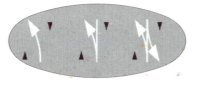
A There is a gentle curve ahead.
B There are no overtaking or crossing lines ahead.
C You must turn in the direction of the arrows.
Question 10
A driver may ……
A Allow a passenger to help him steer the wheel.
B Use hand signals on freeways in an emergency.
C Let the passenger drive on a pavement if it is safe to do so.
Question 11
The Sign below indicates that …..

A No crossing line.
B This lane is for traffic in two different directions at certain times.
C A solid line is about to begin.
Question 12
A driver may not;
A Leave the vehicle unattended on the road for 6 hours.
B Leave the vehicle on the edge of the road.
C Let the passenger sit where there is no seatbelt.
Question 13
The Sign below shows you that this parking bay is reserved for ……

A L 2 cars only.
B High occupancy vehicles only.
C Cars with 12 passengers only.
Question 14
The Sign below shows that the parking bay is reserved for …….

A Buses.
B Business cars.
C Bank tellers only.
Question 15
What is the maximum speed for vehicles exceeding 9000kg?
A 100 Km/h.
B 80 Km/h.
C 120 Km/h.
Question 16
The Sign below shows you the ….

A The maximum speed at night.
B The minimum speed at night.
C The vehicle may drive there at night.
Question 17
What is the colour and size of the flag that must be on the rear of a heavy motor vehicle?
A It must be yellow and 3m x 4m.
B It must be any size.
C It must be red and 300mm x 300mm.
Question 18
The Sign below shows you that ….

A No bicycles allowed.
B No motor bikes allowed.
C Only motor bikes allowed in that lane.
Question 19
How far may you place your triangle if you incur problems with your vehicle on the road?
A 10m in front of the vehicle.
B 45m at the back of the vehicle.
C 30m in front of the vehicle
Question 20
Sign below shows you that ….

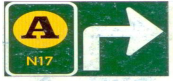
A There is an alternative route ahead.
B Be on the lookout for ambulances.
C There is a sharp turn ahead.
Question 21
When do you have right of way?
(i) When you are within a traffic circle.
(ii) When you have stopped first at a 4-way stop.
(iii) When you want to turn right at an intersection in a two way street.
SELECT THE CORRECT COMBINATION
A (i) and (ii) are correct.
B All of the above are correct.
C (i) only is correct.
Question 22
This Sign below shows that the lane is reserved for …….

A Agricultural vehicles only.
B Government cars only.
D Abnormal vehicles only.
Question 23
What is the function of the silencer of the exhaust?
A To reduce noise from the engine.
B To direct noise or engine fumes to the bottom right hand side of the vehicle.
C To be checked out once a year by a professional mechanic.
Question 24
What does road marking below indicate?

A is a lane reserved for airplanes.
B It is a lane that leads you to the airport.
C It is a double lane for airplanes.
Question 25
Sign below informs you that ….

A Lane reserved for bicycles.
B Lane reserved for motorbikes.
C Bus lane only.
Question 26
How far may you stop your vehicle from a water hydrant?
A. 5m from it.
B 1.5m from it.
C 3.5m from it.
Question 27
Sign DD3 shows you that …..

A There is a police road block ahead.
B Stop for the railway crossing.
C There is a possibility of a robot ahead.
Question 28
For an ordinary driver, the legal alcohol limit per 100ml of blood is ?
A 0.05.
C 0.07g.
B 5.2g.
Question 29
For a professional driver, the legal alcohol limit per 100ml of blood is ….
A 0.07g.
B 0.02g.
C 0.05g.
Question 30
The Sign below shows you that ….

A You are entering the freeway.
B The road is going to become 2 lanes with an island on the right.
C You are driving on a 2-way road.
Question 31
How long is the learner’s licence valid for ?
A 18 months.
B 12 months.
C 24 months.
Question 32
The Sign show below informs you that …

A All vehicles should slow down.
B The driver of a heavy motor vehicle should change gears to a lower gear.
C You should run fast.
Question 33
The following Sign is a …..

A Single railway track crossing.
B Roads which cross.
C Railway track one line.
Question 34
A learner driver may not ….
A Drive on a freeway.
B Carry passengers.
C Leave the engine running while the vehicle is unattended.
Question 35
When are you allowed to stop at the edge of the road?
A In an emergency.
B During the day if you want to relax.
C Anytime.
Question 36
You may cross or enter a public road ….
A If the road is clear of traffic for a short distance.
B If the road is clear of traffic for a long distance and can be done without obstructing traffic.
C In any manner as long as you use your indicator in time.
Question 37
This sign below is also known as an ….

A Information sign.
B Warning sign.
C Regulatory sign.
Question 38
The Road mark below is a ….
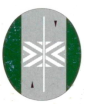
A Rail track crossing.
B Speed hump.
C Parking bay.
Question 39
Which sign indicates a skew junction?
A M3.
B M4.
C M1.
Question 40
Sign below shows you …..

A Restrooms.
B Tourism directions.
C The distance to Ladysmith.
Question 41
The Sign below shows you ….

A The amount you need to pay at the tollgate.
B Confirmation of a toll route and alternative route.
C The ambulance and toll routes.
Question 42
Before changing lanes, the final thing you must do is …..
A Check your mirror.
B Indicate
C Check the blind spot.
Question 43
You must stop your vehicle …..
A 5m from a bridge.
B 6m from the rail tracks crossing,
C 1m from the tunnel.
Question 44
The Sign shown below is a ……

A Exiting lane on the left.
B Lane converges.
C Cross road.
Question 45
If you want to turn left with your vehicle, you must ….
A Slow down completely, stop and turn.
B First move to the right to enable you to turn left easily.
C Give the necessary signal in good time.
Question 46
The fastest speed at which you may tow a vehicle with a rope is ….. km/h.
A 60.
B 45.
C 30.
Question 47
At an intersection, the driver of the vehicle should …..
A Yield and give right of way to all traffic approaching from the left.
B Not enter the intersection if vehicles would most probably obstruct the intersection.
C Overtake slower traffic.
Question 48
Unless otherwise shown by a sign, the general speed limit in a city or town is ….. km/h.
A 60.
B 100.
C 120.
Question 49
When are you allowed to drive your vehicle on the right hand side of the road with traffic in both directions?
A When you switch on the emergency lights of your vehicle.
B When a traffic officer orders you to do so.
C Under no circumstances.
Question 50
What is the speed limit on a freeway when another vehicle is being towed with a tow rope?
A 60 Km/h.
B 30 Km/h.
C 50 Km/h.
Question 51
Which of the following statements are illegal?
A You may allow somebody to sit on the bumper of your car while the car is moving.
B A passenger is allowed to tamper with the volume control of the radio in the car.
C Somebody may sit behind you in a car when you only have a learner’s licence.
Question 52
T o avoid a fine you must produce your licence on request from a traffic officer ….
A Within 24 hours.
B Immediately.
C Within 21 days.
Question 53
When you drive ……
A You must have two hands on the steering wheel.
B Your vision of the road and the traffic must be unobstructed.
C You must wear shoes with rubber soles.
Question 54
Which of the following statements are correct?
(i) It is prohibited to stop a vehicle within 6 meters from a tunnel, subway or bridge.
(ii) It is prohibited to stop your vehicle opposite an excavation on the road.
(iii) It is prohibited to stop a vehicle opposite/alongside a vehicle where such road is less than 9m wide.
SELECT THE CORRECT COMBINATIONS
A (i), (ii) and (iii) are correct.
B (i) and (ii) only are correct.
C (ii) only is correct.
Question 55
Your motor car’s headlights must be switched on ….
(i) At anytime of the day when you cannot see persons and vehicles 150m in front of you.
(ii) From sunset to sunrise.
(iii) When it rains and you cannot see vehicles 100m in front of you.
SELECT THE CORRECT COMBINATIONS
A (i) only is correct.
B (i) and (ii) are only correct.
C All of the above are correct.
Question 56
At an intersection …..
A Pedestrians who are already crossing the road when the red man signal starts flashing have the right of way.
B You can pass another vehicle waiting to turn right on its left side by going off the road.
C You must stop in it to offload passengers.
Question 57
When do you have right of way?
(i). When you are within a traffic circle.
(ii). When you have stopped first at a four way stop.
(iii). When you want to turn right at an intersection on a two way road.
SELECT THE CORRECT COMBINATIONS
A (i) and (ii) only are correct.
B All of the above are correct.
C (i) only is correct.
Question 58
What is the general speed limit on a freeway?
A 120 Km/h.
B 100 Km/h.
C 60 Km/h.
Question 59
You are not allowed to stop ….
A Opposite a vehicle where the roadway is 10m wide.
B Where you are also not allowed to park.
C 5m from a bridge.
Question 60
The Sign below indicates parking area reserved for ….

A Buses only.
B Minibuses only.
C Taxis only.
Question 61
When are you allowed to overtake another vehicle on the left hand side?
A Near the rise of a summit.
B At an intersection when the other vehicle is turning right and without going off the verge of the road.
C In foggy conditions and where one can see for a short distance.
Question 62
When you see Sign B1 you must …..
A Drive at 50km/h or more.
B Drive slower than 50km/h.
C Drive for 50km.
Question 63
A safe following distance is, when the vehicle in front of you suddenly stops ….
A Stop without swerving.
B Swerve and stop next to it.
C Swerve and pass.
Question 64
To avoid being fined the driver must ensure that a child is ……
A On the drivers lap.
B On a passengers lap.
C In a child seat that is properly secured with a seat belt.
Question 65
When you want to turn left, you must …..
A Slow down first then come to a complete stop.
B Move to the right, and then turn left.
C Give necessary signals on time.
Question 66
You may not drive into an intersection if ………..
A The robot is yellow and you are already in the intersection.
B If there is not enough space in the intersection to turn right without blocking other traffic.
C You are towing a vehicle.
Question 67
The Sign below shows you that …..

A You can drive in that lane at 80 km/h.
B You can drive there for 80km.
C It is a lane designated for blue light vehicles.
Question 68
Which of the following are you allowed to do?
A Drive your car on the side walk.
B Leave the engine running while filling petrol.
C Move your car backwards only if it is safe to do so.
Question 69
The Sign below indicates that it’s…..

A 3km to the next turn off the freeway.
B 300m to the next turn off.
C 3m from the edge of the road.
Question 70
The thread pattern of your vehicle tyres may not be less than …. mm.
A 0.75mm.
B 1mm.
C 1.5mm.
Question 71
The Sign below shows you that ….

A There is a policed road block on the left.
B There is a broken down vehicle in front.
C Traffic movement by obstruction.
Question 72
When are you allowed to drive your vehicle on the right hand side of the road with traffic in both directions?
A When you switch on the emergency lights of your vehicle.
B When a traffic officer directs you to do so.
C Under no circumstances.
Question 73
This Sign shows you that ….

A All vehicles must turn left there.
B All goods vehicles must turn left ahead.
C All goods vehicles can turn left if they wish.
Question 74
The legal speed which you may drive …..
A Is always `120km/h outside cities and towns.
B Can be determined by yourself if you look at the number of lanes which the road has.
C Is shown to you by the road signs that are on the road.
Question 75
When you are approaching the sign below you must ……

A Slow down and stop.
B Change to a lower gear.
C Get ready to turn left or right.
Question 76
Under what circumstances, if any, may a traffic sign be disregarded?
A When you doubt that the sign is applicable for the lane in which you are driving.
B When directed to do so by a policeman or traffic officer.
C In an emergency.
Question 77
What is the maximum period of time that a vehicle may be parked in one place on a road outside urban area.
A 7 days.
B 48 hours
C 24 hours.
Question 78
Sign below shows the area is reserved for ….

A Delivery vehicles only.
B Goods vehicles only.
C Milk loads only.
Question 79
Where are you allowed to stop?
A Opposite an excavation.
B Where indicated by a road traffic sign.
C With the front of the vehicle facing approaching traffic.
Question 80
The Road marking shown below indicates ……

A Speed hump.
B Rail track crossing.
C Stop and go if it is safe.
Question 81
When you are involved in a collision, you ….
(i). Must immediately stop your vehicle.
(ii). Must see if somebody is injured.
(iii). May use a little bit of alcohol.
SELECT THE CORRECT COMBINATIONS
A. (i) and (ii) are correct.
B (ii) only is correct.
C All of the above are correct.
Question 82
This Sign below prohibits ….

A Construction vehicles to drive there.
B Ambulance to drive there.
C Police to park there.
Question 83
When you want to pass another vehicle on the right-hand side, you must ….
(i). Keep a safe distance.
(ii).Look out for approaching vehicles.
(iii). Not pass to close to the vehicle which is being overtaken before moving back to the left hand side again.
SELECT THE CORRECT COMBINATION
A (i) and (ii) only are correct.
B (i), (ii) and (iii) are correct.
C (iii) only is correct.
Question 84
The Road marking below shows you that …..

A There is a gentle curve ahead.
B There is no crossing or overtaking line ahead.
C None of the above.
Question 85
You may transport goods on your vehicle that ….
A Protrude 2.0m at the rear.
B Protrude 450mm in front.
C Does not exceed 2.5m wide.
Question 86
The Sign shown below warns you that ….

A There is a sharp curve for 80 km/h.
B There is a sight curve in the road and 80 km/h is recommended.
C Only 80 trucks must drive there.
Question 87
Which is allowed when towing another vehicle?
(i). A vehicle tows another vehicle with a rope and drives 40 km/h.
(ii). You tow another vehicle with a tow bar.
(iii). A tractor tows a semi-trailer with 10 passengers on it at a speed of 30 km/h.
SELECT THE CORRECT COMBINATIONS
A All of the above are correct.
B (ii) and (iii) only are correct.
C (i) only is correct.
Question 88
The Sign shown below allows …

A Authorized vehicles only.
B Parallel parking only.
C Two-way traffic.
Question 89
This Sign below indicates shows you that ….

A The road ahead is a dead end.
B You are not allowed to turn left.
C There is a T-junction to the left.
Question 90
Arrow E in the sketch booklet below shows you that ….

A Must turn right from that lane.
B Can turn right or move straight on if it is safe.
C Can still change lanes if you want to go on straight.
Question 91
The Sign displayed below shows you that there is a ……

A Curve to the left ahead.
B Temporary obstruction left of the road.
C Temporary detour to the left.
Question 92
A temporary sign (yellow background)…..
A Has the same consequences as a permanent sign if ignored.
B Can be ignored as it is a temporary sign.
C Can be ignored at night.
Question 93
This Sign below (red flashing arrow) indicates you can …..

A Stop and check, if it is safe then go.
B Yield and go.
C Wait for the green light then go.
Question 94
The Sign below shows you that …..

A You are in a one-way.
B The street in front of you is a one-way street.
C It is a one-way to the left.
Question 95
The Sign below shows you that ….

A You may tow another vehicle there.
B Only trailers not allowed.
C No towed vehicles or trailers allowed.
Question 96
This Sign shows you that …..

A A single carriageway road begins there.
B Single carriageway freeway begins there
C End of the freeway.
Question 97
This Sign below shows you that ….

A A double road begins.
B You are not allowed to drive there with a learner’s licence.
C It is the beginning of the freeway.
Question 98
The Sign displayed below shows you that ….

A The tarred road on which you are traveling is becoming a sand road.
B There is a soft shoulder of the road beginning.
C There is an arrestor bed to the left.
Question 99
The Sign below shows you that ….

A The road is busy being tarred.
B There is loose gravel on the left of the road.
C To warn that material on the shoulder maybe softer than expected.
Question 100
Where could you possibly get this sign below.

(i). There is maybe a school ahead.
(ii). There may be a robot on the other side of the hill.
(iii). There is a park where children cross the road.
(iv). There is a blocked pedestrian crossing ahead.
SELECT THE CORRECT COMBINATION
A (i) and (ii) only are correct.
B (i), (iii), and (iv) only are correct.
C All of the above are correct.
Question 101
How far should your number plate be legible from the front and back?
A 80m.
B 60m.
C 20m.
Question 102
How far must stop lamps (stop lights) be visible in sun light?
A 60m.
B 40m.
C 30m.
Question 103
To whose vehicles may stop lamps be fitted?
(i) Fire fighting vehicle ambulance.
(ii). Medical practitioner veterinarian.
(iii). Breakdown vehicle.
(iv). To your private vehicle.
SELECT THE CORRECT COMBINATIONS
A (i) and (ii) are correct.
B (i), (ii) and (iii) are correct.
C All of the above are correct.
Question 104
When may you use your fog lights?
A When you put your lights on.
B When there is dust fog or smoke around.
C Only at night.
Question 105
What is the maximum turning radius of a vehicle allowed?
A 20.2m.
B 18.5m.
C 13.1m.
Question 106
How many windscreen wipers should be fitted to a vehicle?
A 2 wipers.
B 1 wiper on the passenger side.
C 1 wiper directly in front of the driver and works continuously.
Question 107
When driving on the road the fuel tank must ……
A Have a cap that fits loosely.
B Have a cap that fits effectively.
C Put a piece of plastic in it, till you get to the garage.
Question 108
When must you use your emergency warning triangle?
A When your vehicle has broken down.
B When parked outside your friend’s house on the wrong side of the road facing oncoming traffic.
C Or you want to stop for a lunch break next to the road.
Question 109
When may you talk a cell phone whilst driving?
A When you hold the cell phone with your shoulder and ear.
B When you want to make an emergency call to a friend.
C You are not allowed talk on a cell phone whilst driving, unless it’s a hands free kit.
Question 110
Sign EE6 shows you that ….
A The height of the bridge is 2.1m.
B The width of the road is 2.1m
C The maximum weight that the road can carry is 2.1 ton.
Question 111
What is the difference between the two signs below?

A There is no difference.
B Sign I.2 is where the lane reservation begins.
C Sign I.1 is where the lane ends.
Question 112
What does the sign below tell you …..?

A There is parking for a sports event.
B There may be a funeral procession ahead.
C Look out for slow moving vehicular traffic and adjust speed accordingly.
Question 113
What does sign below indicate ….?

A Beware of electrical storms.
B Watch out for thunder and lightning.
C There may be electrical wires on the ground.
Question 114
What is the speed limit for buses and mini buses on major roads and freeways?
A 120 Km/h.
B 100 Km/h.
C 80 Km/h.
Question 115
When you are on the freeway and a vehicle wants to merge from an on-ramp you must ….
A Speed up and close the gap.
B Maintain your speed.
C Must allow the vehicle to merge in front of you.
Question 116
What is the maximum distance that an object my protrude beyond in front of a light motor vehicle.
A 250mm.
B 300mm.
C 450mm.
Question 117
What is the maximum distance that an object may protrude beyond the back of a light motor vehicle?
A 1.5m.
B 2.5m.
C 1.8m.
Question 118
The Sign below shows you that ……

A It is a lane for cyclists only.
B You can drive there with your car.
C Motor bikes can drive there also.
Question 119
Where would you more likely find this sign below ?

A In a suburban area.
B In a mountainous area.
C In towns.
Question 120
At what age can you apply for a learner’s licence for a code C or C1.
A 16 years old.
B 17 years old.
C 18 years old.
Question 121
How far should your direction indicator be seen by a person of normal eyesight?
A 50m.
B 30m.
C 75m.
Question 122
Yellow reflective material shall be fitted to the sides and rear of all goods vehicles of which the gross vehicle mass exceeds …….
A 9000kg.
B 7500kg.
C 10000kg.
Question 123
When is it not compulsory to have yellow reflective material on the sides and rear of a heavy motor vehicle?
A Does not exceed 10000kg.
B Does not exceed 9000kg.
C Does not exceed 8000kg.
Question 124
What is the minimum following distance for a heavy motor vehicle?
A 2.Seconds.
B 3 Seconds.
C 4 Seconds.
Question 125
When you see this sign below you must:

A Stop for a police road block in 300m.
B Begin slowing down if turning off a freeway.
C Check your 3 second following distance.
Question 126
Name the group of signs that this sign below belongs to:

A Regulatory.
B Warning.
C Information.
Question 127
Name the group of signs that this sign below belongs to:

A Regulatory.
B Information.
C Warning.
Question 128
Name the group of signs that this sign below belongs to:

A Guidance and information.
B Warning.
C Regulatory.
Question 129
Name the group of signs that this sign below belongs to

A Warning.
B Combination sign Warning.
C Selective restriction.
Question 130
This sign below informs the driver that:

A This is the beginning of a one-way road.
B The left lane is coming to an end.
C There is a sharp junction from the left.